Both treatments live under the same umbrella of radiofrequency microneedling, and that shared label sends plenty of people into a consultation asking for one when their goal points clearly to the other. Each device pairs tiny needles with radiofrequency heat to rebuild collagen below the surface. The way they apply that heat, and the concerns they were built to solve, is where they part company.
What Morpheus8 does
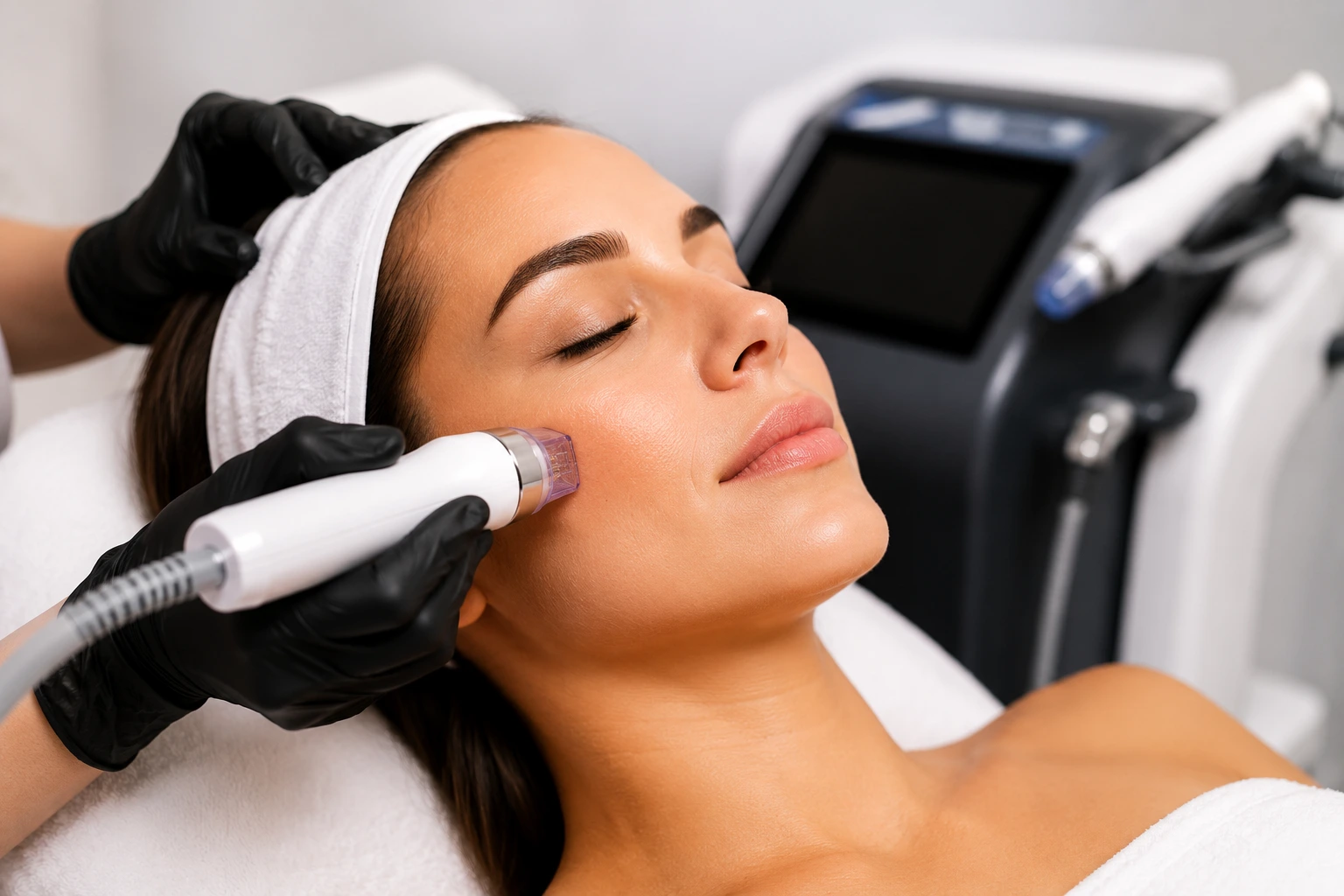
Morpheus8 is a deep fractional radiofrequency device built to remodel skin and the tissue beneath it across broad areas of the face and body. A handpiece studded with fine needles presses into the skin, and once those needles reach a set depth, they release radiofrequency energy that warms the dermis and the fatty layer underneath. That heat is the active ingredient. It triggers a wound-healing response that lays down fresh collagen and elastin over the following weeks, which firms loose skin and refines texture as it builds.
What sets Morpheus8 apart is reach. The needles adjust to different depths, going as deep as 8 millimeters with the body tips, so a single session can work the surface layers that govern tone alongside the deeper fat that influences contour. Interchangeable tips carry different needle counts, with smaller arrays for the face and larger ones for the body, which lets a provider tighten a jawline one week and treat an abdomen or knees the next. The coated needles deliver heat below the surface while sparing the top layer of skin, part of why the treatment holds a solid safety record across a wide range of skin tones.
Because it covers ground, Morpheus8 tends to suit people thinking in zones rather than spots. Sagging along the lower face, crepey skin on the neck, scattered acne scarring across the cheeks, or laxity on the body after weight loss all sit squarely in its wheelhouse. Most patients book a short series spaced several weeks apart and watch results sharpen over three to six months as collagen matures. For face and body remodeling, our Morpheus8 RF microneedling in Louisville runs as a plan matched to the area being treated.
What Agnes RF does
Agnes RF is a precision radiofrequency device built to treat specific structures in the skin with a level of control closer to a surgical instrument than a resurfacing tool. It was developed by Korean dermatologist Dr. Gun Young Ahn, and its signature feature is a set of insulated microneedles. The insulation runs along the shaft so radiofrequency energy releases only at the exposed tip, placing heat at one exact depth while the surrounding skin stays untouched. That control is what makes Agnes RF a different kind of tool.
The device earned its reputation on problems that larger treatments struggle to reach. It can shrink the small fat pockets that create under-eye bags, a result that used to call for surgery, by heating and reducing the fat pad through a needle rather than an incision. It also treats stubborn acne at the source. By delivering heat into an overactive oil gland, Agnes RF can selectively disable the gland that keeps feeding a recurring breakout, which gives it a role in chronic acne that few energy devices share. Jowls and isolated pockets of laxity along the jaw round out its usual targets.
That precision comes with a trade in coverage. Agnes RF works point by point, so it shines on a defined concern and is rarely the right pick for resurfacing a whole face. Sessions tend to be short, often run under local numbing, and most plans involve one to three visits spaced several weeks apart, with collagen and contour changes settling in over the months that follow. Our Agnes RF microneedling in Louisville, KY is built around that targeted approach, with depth and needle choice mapped to the structure being treated.
Morpheus8 vs. Agnes RF at a glance
The fastest way to see the contrast is side by side. The table below maps where these two devices diverge.
Factor | Morpheus8 | Agnes RF |
|---|---|---|
Core design | Fractional RF spread across broad zones of skin | Insulated microneedle that places heat at precise points |
Coverage | Larger areas of the face and the body | Targeted spots and small structures |
Needle depth | Adjustable, reaching up to 8 mm with body tips | Set to one precise depth for each pass |
Built to address | Overall laxity, texture, wrinkles, and body contour | Under-eye bags, active acne, jowls, small fat pockets |
Signature strength | Whole-zone tightening and resurfacing | Surgical-style precision on a single concern |
Typical plan | A short series of sessions, weeks apart | One to three visits, weeks apart |
Best candidate | Anyone improving skin by region | Anyone correcting a defined problem area |
A simple way to choose: reach for Morpheus8 when you want to improve a whole area of skin, and reach for Agnes RF when you want to correct one specific thing that bothers you. |
What the research shows
Both treatments rest on the same well-studied foundation, since radiofrequency microneedling as a category has been measured closely for skin remodeling and collagen repair. The collagen response is the part of the science that holds up most consistently. Heat delivered into the dermis prompts new collagen and elastin, and that rebuilding is what firms skin and softens scars over a course of sessions.
The numbers back the approach. In a systematic review of fractional radiofrequency microneedling published in Clinical, Cosmetic and Investigational Dermatology, one of the included studies found that 80.64 percent of patients achieved a two-grade improvement in their acne scarring, alongside reductions in active lesions and oil production (Niaz et al., 2025). Results like that, graded by clinicians rather than self-reported, are what give the technology credibility beyond before-and-after photos.
One honest caveat applies to both devices. A single session rarely delivers the full picture. The visible payoff builds across a planned series and continues for months after the last visit as collagen matures, so consistency does more for your result than chasing intensity in any one appointment.
How to choose the one that fits your goal
Your goal should drive the decision, so start by naming the change you actually want.
If you are looking at a broad zone, a lower face that has started to soften or skin that loosened after weight loss, Morpheus8 is the stronger match. It treats the whole region in a session and rebuilds structure across the area rather than at a single point. The same logic applies to body work, where its depth and larger tips do what a precision device cannot.
If your concern is sharp and specific, under-eye bags that make you look tired or a breakout that keeps returning to the same patch of skin, Agnes RF is built for exactly that. It places heat where the problem lives and leaves the surrounding skin alone, which is why it can address concerns that once meant a surgical referral.
Two practical factors round out the decision.
Downtime and comfort. Both treatments are minimally invasive and run under topical or local numbing. Morpheus8 covers more skin, so redness and mild swelling tend to track with the size of the area treated. Agnes RF, working in smaller zones, often leaves more contained aftereffects.
The shape of the result. Morpheus8 produces broad improvement you notice across a region. Agnes RF produces a focused correction you notice in one place. Matching that to your expectation is what keeps you satisfied at the six-month mark.
For some people the honest answer is a different treatment altogether. If you want firmer skin without surface microneedling, Attiva skin tightening in Louisville delivers radiofrequency through a fine probe beneath the skin, and a provider can tell you whether it fits your goal better than either device here.
Can you combine them?
Yes, and pairing the two is common when someone has more than one goal. The devices solve different problems, so they complement each other rather than compete. A patient might use Morpheus8 to tighten and resurface the lower face, then have Agnes RF address the under-eye bags or a single acne-prone zone that needs pinpoint work. The plan depends on your skin and the timing of each treatment, which is something a provider maps out so the two are sequenced with intention.
Many patients also fold in supportive care between sessions. Gentle modalities such as red light therapy in Louisville can ease recovery and feed the same collagen pathways the needles activate, and a calmer healing window tends to make the whole series more comfortable.
Questions patients ask before booking
Which one hurts more?
Neither is described as painful once numbing is in place. Morpheus8 covers more skin, so the session feels longer, while Agnes RF concentrates on small areas under local anesthetic. Most people rate both as very manageable.
How soon will I see results?
You may notice early tightening within a few weeks, but the real change shows up over three to six months as collagen rebuilds. That timeline holds for both devices.
Is one safer for deeper skin tones?
Radiofrequency heats tissue based on its electrical properties rather than pigment, which gives both treatments a strong safety profile across skin tones. Your provider still tailors the settings to your skin during the consultation.
Can either treat active acne and not only scars?
Agnes RF is the one designed to treat active acne at its source by targeting the oil gland behind a recurring breakout. Morpheus8 is aimed more at scarring and laxity than at stopping new breakouts.
What a session looks like at RevitaLife MD
RevitaLife MD operates as a health optimization and longevity center, so these treatments sit alongside real medical oversight rather than standing on their own. Dr. Brad Cummins brings more than 20 years of clinical experience, and every plan starts with a skin assessment that matches the device to your concern before anything is booked.
Expect a topical or local numbing step, a treatment window that runs from about 30 minutes to an hour depending on the area, and a short recovery that most people compare to a warm, mild sunburn for a day or two. Neither device asks for real downtime, so most patients fold a session into an ordinary week. Aftercare comes down to sun protection and gentle skin care while the collagen does its slower work underneath.
The bottom line
Morpheus8 and Agnes RF answer two different questions. One remodels skin across a whole region and reaches deep enough to influence contour on the face and body. The other places heat with precision on a single concern, from under-eye bags to a breakout that will not quit. Name the result you are after and the right choice usually becomes clear, and there is no rule against using both when your goals call for it.
Ready to find your fit? Book a skin consultation with our Louisville team, and we will map the device, or the combination, that gets you the result you want.
Disclaimer
This content is provided for general educational purposes and is not intended as medical advice. The treatments described are intended to support skin health and appearance and are not intended to diagnose, treat, cure, or prevent any disease. Individual results vary and are not guaranteed. Please consult a qualified healthcare provider before beginning any new treatment, particularly if you are pregnant, have an active skin infection, use a pacemaker or another implanted electronic device, or are uncertain how your skin will respond.
References
Niaz G, Ajeebi Y, Alshamrani HM, Khalmurad M, Lee K. Fractional Radiofrequency Microneedling as a Monotherapy in Acne Scar Management: A Systematic Review of Current Evidence. Clinical, Cosmetic and Investigational Dermatology. 2025;18:19-29. Read the review
Cho SI, Chung BY, Choi MG, et al. Evaluation of the clinical efficacy of fractional radiofrequency microneedle treatment in acne scars and large facial pores. Dermatologic Surgery. 2012;38(7 Pt 1):1017-1024. View on PubMed
Selective Sebaceous Gland Electrothermolysis Using a Single Microneedle Radiofrequency Device for Acne Patients: A Prospective Randomized Controlled Study. 2019. View on PubMed
Disclosure
The information in this article is provided for general educational purposes and is not intended as medical advice. The wellness treatments described are intended to support overall well-being and are not intended to diagnose, treat, cure, or prevent any disease. Individual results vary and are not guaranteed. Please consult a qualified healthcare provider before starting any new treatment, particularly if you are pregnant, managing a cardiovascular condition, taking medications that interact with heat or light exposure, or uncertain how your body will respond to either modality.