That sounds obvious, but it matters here: the air you pull into your lungs right now contains roughly 21% oxygen. The rest is nitrogen and trace gases your body doesn’t particularly need. Under normal conditions, that 21% is enough to keep you alive and functional. But enough to keep you alive and enough to repair damaged tissue, fight chronic inflammation, or accelerate recovery are two very different thresholds.
Hyperbaric oxygen therapy (HBOT) was designed to close that gap. By placing a patient inside a pressurized chamber and delivering 100% medical-grade oxygen, HBOT forces the body to absorb oxygen at levels that simply aren’t achievable through normal breathing. It’s a concept rooted in physics, backed by decades of clinical research, and increasingly used outside the hospital setting for wellness and performance goals.
Here’s a closer look at what actually happens during a session, why it works at the cellular level, and who stands to benefit.
The physics behind the pressure
HBOT relies on a principle you may remember from chemistry class: Henry’s Law. Put simply, the amount of gas that dissolves into a liquid increases when the pressure above that liquid increases.
Under normal atmospheric pressure (1 ATA), the vast majority of oxygen in your blood is carried by hemoglobin inside red blood cells. Plasma, the liquid portion of your blood, carries very little. Inside a hyperbaric chamber operating at 1.5 to 3 ATA, the pressure pushes oxygen molecules directly into the plasma itself. This is the critical difference. Oxygen bound to hemoglobin can only travel where red blood cells can go. Oxygen dissolved in plasma, on the other hand, can reach areas with restricted blood flow: swollen tissue, damaged capillaries, post-surgical sites, and inflamed joints.
The result is a body saturated with oxygen at levels it doesn’t normally experience. And that saturation triggers a cascade of biological responses.
What happens inside your body during HBOT
The benefits of HBOT aren’t limited to delivering more oxygen. The pressurized environment sets off several overlapping mechanisms that influence how your body heals, fights infection, and manages inflammation.
Angiogenesis: building new blood vessels
Repeated exposure to elevated oxygen levels stimulates the release of vascular endothelial growth factor (VEGF), a signaling protein that promotes the formation of new capillaries. Over a series of sessions, this can meaningfully improve blood supply to areas that have been oxygen-starved, including chronic wounds and tissue affected by radiation therapy.
Reducing inflammation
Elevated oxygen levels downregulate pro-inflammatory cytokines while promoting anti-inflammatory pathways. For people dealing with systemic inflammation, whether from an autoimmune condition, a sports injury, or post-surgical recovery, this shift can be significant. HBOT doesn’t merely mask inflammation. It alters the biochemical environment in which inflammation occurs.
Stem cell mobilization
One of the more compelling findings in recent HBOT research involves stem cell activity. Repeated sessions have been shown to increase circulating stem cells by stimulating the bone marrow to release more progenitor cells into the bloodstream. These cells migrate to sites of injury, where they differentiate into the tissue types needed for repair.
Antimicrobial action
Elevated oxygen is directly toxic to certain anaerobic bacteria (organisms that thrive in low-oxygen environments). HBOT also enhances the killing ability of white blood cells, making it a valuable adjunct therapy for stubborn infections, particularly those that resist standard antibiotic treatment.
Normal breathing vs. HBOT: a side-by-side comparison
Factor | Normal breathing | During HBOT |
Oxygen concentration | ~21% | 100% |
Atmospheric pressure | 1 ATA (sea level) | 1.5 to 3 ATA |
Primary oxygen carrier | Hemoglobin (red blood cells) | Hemoglobin + plasma |
Oxygen reach | Limited to areas with intact blood flow | Penetrates swollen and damaged tissue |
Plasma oxygen levels | Baseline | Up to 10-15x above baseline |
What a session actually looks like
If you’ve never been inside a hyperbaric chamber, the concept can sound intimidating. In practice, it’s one of the more passive medical treatments you’ll encounter.
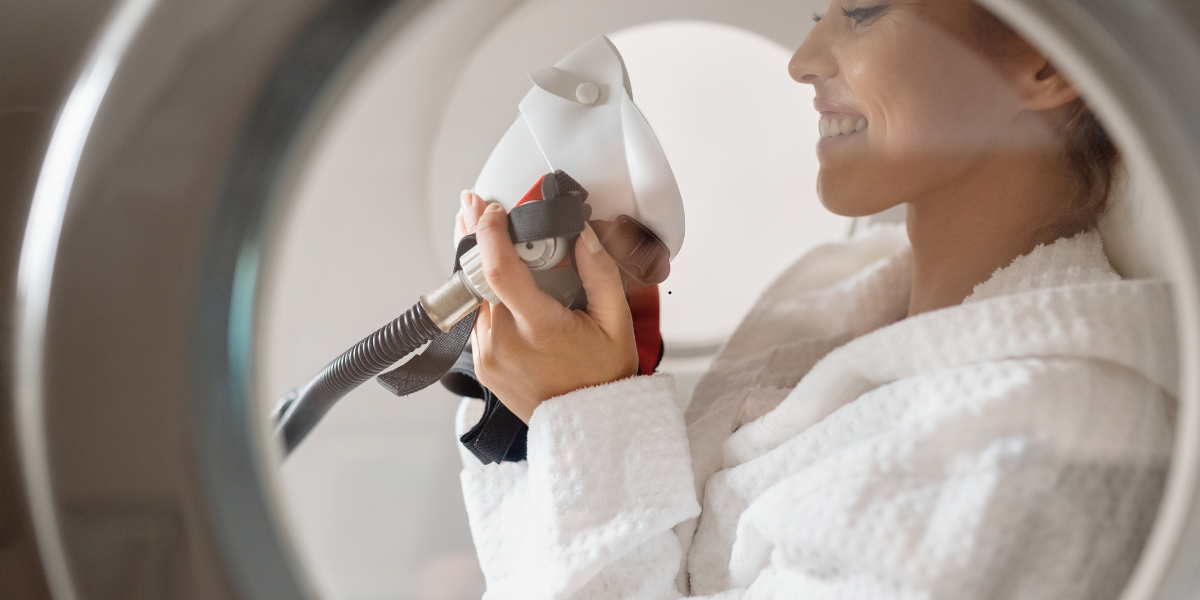
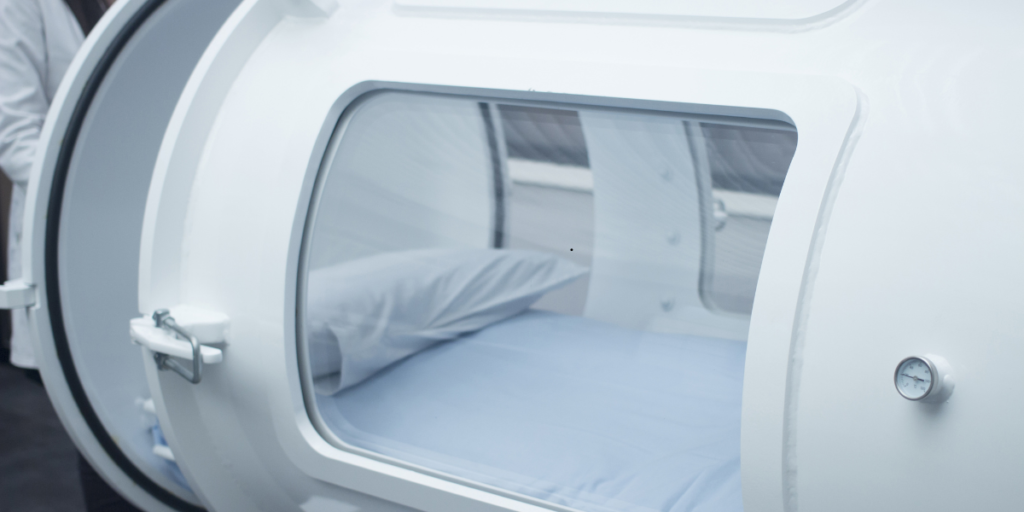
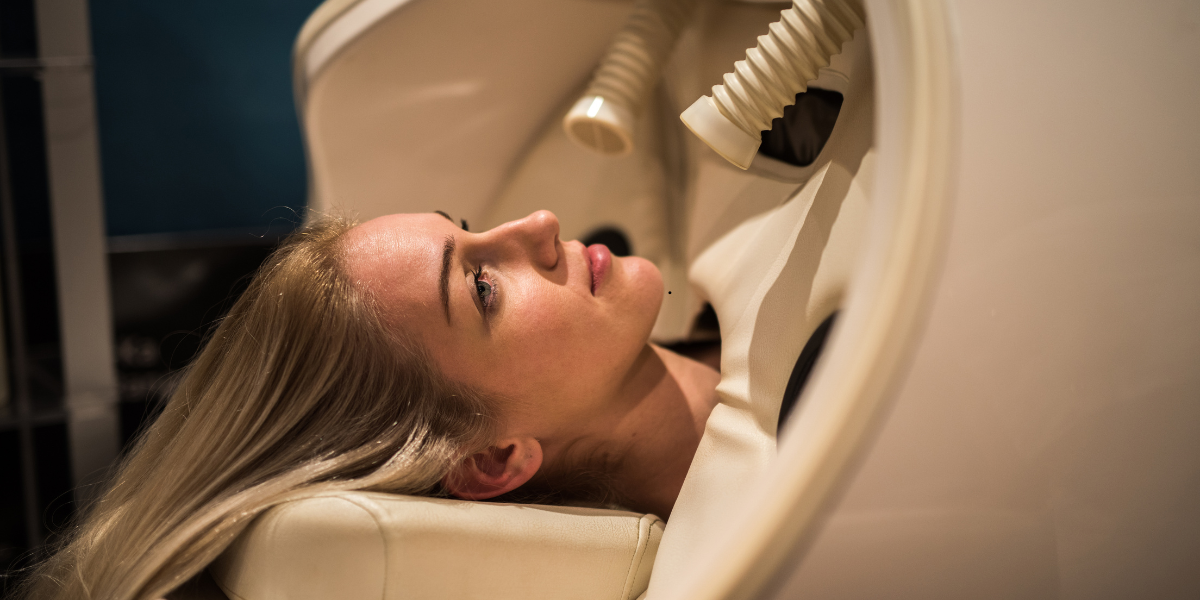
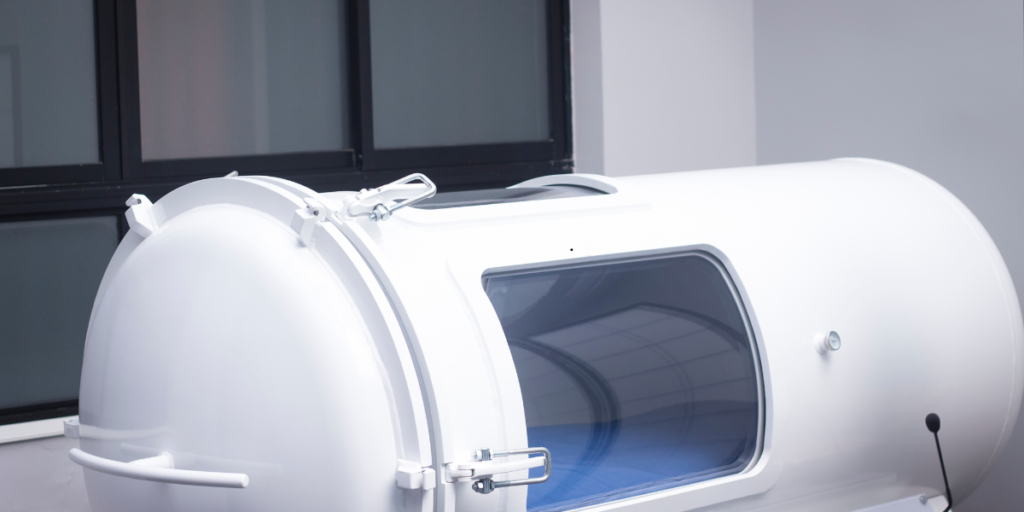
At RevitaLife MD in Louisville, KY, patients enter a medical-grade chamber and lie down comfortably. The chamber is gradually pressurized over several minutes (the sensation is similar to descending in an airplane, with mild ear pressure that clears by swallowing or yawning). Once target pressure is reached, you breathe normally for 60 to 90 minutes. Many patients read, nap, or listen to music during the session.
Afterward, the chamber depressurizes slowly, and you go about your day. There’s no downtime. Some people feel a mild temporary fatigue after their first few sessions, though most report feeling energized.
It’s worth noting the difference between clinical-grade and consumer-grade chambers. Soft-shell chambers sold for home use typically operate at much lower pressures (1.3 to 1.4 ATA) and deliver ambient air or low-concentration oxygen. Medical-grade hard-shell chambers, like the ones used at RevitaLife MD, operate at significantly higher pressures with 100% oxygen delivery. The distinction matters because the therapeutic effects described in published research are based on the higher-pressure, medical-grade protocols.
Treatment protocols vary depending on the indication. FDA-approved conditions may require 20 to 40 sessions. Wellness-focused protocols at clinics like RevitaLife MD often follow a similar structure, with sessions scheduled several times per week over the course of a month or two. Some patients do a single introductory session to see how they feel before committing to a full protocol.
The conditions HBOT is FDA-approved to treat
HBOT has FDA clearance for 13 medical conditions, all supported by substantial clinical evidence.
These include:
- decompression sickness (the condition that originally drove development of hyperbaric medicine for divers)
- carbon monoxide poisoning
- non-healing diabetic wounds
- crush injuries
- severe burns
- radiation-related tissue damage
- compromised skin grafts
- specific types of sudden vision or hearing loss
The common thread among these conditions: they all involve tissues that aren’t getting enough oxygen through normal circulation. Whether the cause is physical trauma, compromised vasculature, or toxic exposure, HBOT addresses the root problem by flooding the body with oxygen that can bypass damaged delivery systems.
For a full breakdown of FDA-approved indications and what they mean in practical terms, see the hyperbaric oxygen therapy page in Louisville, KY.
Beyond the FDA list: why wellness patients are paying attention
Cognitive performance and brain health represent one of the most active areas of HBOT research. Studies out of Tel Aviv University have shown that specific HBOT protocols can improve cerebral blood flow, enhance neuroplasticity, and increase oxygen delivery to brain regions affected by aging or injury. For individuals recovering from concussions or dealing with age-related cognitive decline, these findings carry real clinical weight.
Athletic recovery is another area where HBOT has gained traction. Professional sports teams have been using hyperbaric chambers for years. The mechanism is straightforward: accelerated oxygen delivery reduces inflammation, speeds tissue repair, and shortens recovery windows between training sessions or competitions.
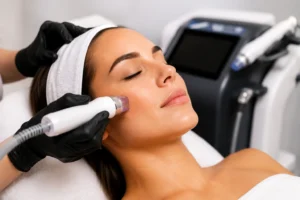
HBOT has also attracted interest as a complement to aesthetic treatments. The logic is that flooding the skin with oxygen promotes collagen synthesis and cellular turnover, which is why some patients combine HBOT with treatments like RF microneedling in Louisville or chemical peels to potentially enhance and extend their results.
Research spotlight A 2020 prospective trial published in the journal Aging enrolled 35 healthy adults aged 64 and older in a 60-session HBOT protocol. The results were striking: telomere length in immune cells increased by over 20%, while senescent (aging) cell counts dropped by as much as 37%. The researchers concluded that HBOT induced cellular changes typically associated with reversal of biological aging markers. Source: Hachmo Y, Hadanny A, et al. Aging, 2020. |
Who is a good candidate
People managing chronic wounds, particularly diabetic ulcers, represent one of the most well-documented use cases. The same applies to individuals recovering from radiation therapy, where HBOT can help restore blood flow to tissue damaged during cancer treatment.
On the wellness side, candidates include anyone dealing with persistent fatigue, lingering post-infection symptoms, slow recovery from workouts, or cognitive concerns. People who have been through a difficult recovery from COVID-19, Lyme disease, or mold exposure sometimes pursue HBOT to address residual brain fog and low energy, though these remain investigational uses.
Patients already pursuing a longevity-focused wellness plan in Louisville, such as those combining hormone replacement therapy with lifestyle optimization, often add HBOT as a complementary modality. The idea is that balancing hormones improves the body’s signaling, while HBOT ensures that oxygen, the most fundamental fuel for cellular function, reaches every tissue that needs it.
- Contraindications to discuss with your provider: untreated pneumothorax, certain types of ear surgery, and some chemotherapy agents that interact with elevated oxygen levels.
- Mild side effects: temporary ear pressure (similar to flying), light fatigue after initial sessions, and in rare cases, temporary changes in vision that resolve on their own.
How HBOT fits into a broader wellness strategy
One of the more interesting developments in functional medicine is the idea of stacking complementary therapies to amplify results. HBOT pairs particularly well with modalities that also target oxygenation, circulation, and cellular repair.
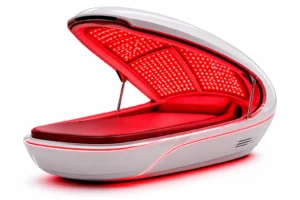
At RevitaLife MD, many patients incorporate HBOT alongside red light therapy in Louisville, which uses specific wavelengths to stimulate mitochondrial function. Others combine it with infrared sauna sessions or whole-body cryotherapy in Louisville, creating a recovery-focused routine that addresses inflammation, circulation, and tissue repair from multiple angles. This multi-modality approach is part of what RevitaLife MD’s Superhuman Protocol is built around.
The underlying philosophy is that no single therapy does everything. But when you combine treatments that work through different mechanisms, the cumulative effect can exceed what any one of them delivers alone. A patient recovering from a sports injury, for example, might use cryotherapy immediately after training to manage acute inflammation, HBOT later that week to accelerate tissue repair, and infrared sauna to promote circulation and relaxation. Each therapy targets a different phase of the recovery process.
What the skeptics get right (and wrong)
HBOT is not a cure-all, and legitimate medical professionals will tell you as much. The FDA has issued warnings about clinics making unsubstantiated claims, particularly around autism, Alzheimer’s disease, and cancer treatment. Those warnings are warranted. Overpromising undermines the credibility of a therapy that, when used appropriately, has genuine clinical value.
Where the skeptics sometimes get it wrong is in dismissing the therapy altogether. The mechanisms of action behind HBOT are well-understood: Henry’s Law, angiogenesis, stem cell mobilization, immunomodulation. These aren’t fringe concepts. They’re established physiology. The question isn’t whether HBOT does something. It clearly does. The question is how much it does for a given condition, for a given patient, at a given dose. That’s what ongoing research is working to answer.
Getting started with HBOT in Louisville
If you’ve been reading about hyperbaric oxygen therapy and wondering whether it’s worth exploring, the lowest-risk way to find out is to try a session. At RevitaLife MD, introductory HBOT sessions start at $97, and every patient receives a consultation to determine whether HBOT aligns with their health goals.
Whether you’re recovering from a specific injury, managing chronic inflammation, or looking for an evidence-informed addition to a longevity program, HBOT is worth a serious conversation with a qualified provider.
Book a hyperbaric oxygen therapy consultation in Louisville to get started.
Disclaimer: This content is for educational and informational purposes only and should not be interpreted as medical advice. Hyperbaric oxygen therapy is FDA-approved for specific medical conditions; other uses discussed in this article are investigational and are not intended to diagnose, treat, cure, or prevent any disease. Individual results may vary. Consult a qualified healthcare provider before beginning any new therapy.