Most people judge aging by what shows up in the mirror. Gray hair and fine lines are easy to spot. The changes that matter most for long-term health happen out of view, inside cells and blood vessels, in the hormone signals that keep the body in balance.
Scientists who study aging now have a much clearer picture of those hidden changes. They can describe how cells accumulate damage over time and which habits or medical factors speed that process up or slow it down. For most adults past their 30s, a large share of how they age responds to decisions made every week.
This guide covers the biology behind healthy aging and the eight factors with the most influence on how your body holds up over the decades.
What Is Healthy Aging?
Healthy aging is the process of keeping your body and mind working well as the years pass, so that a longer life also means more years spent active and independent. The World Health Organization defines it around functional ability, meaning the capacity to keep doing the things a person values, rather than the simple absence of disease.
Researchers often use the term healthspan to describe this idea. Lifespan counts the total years a person lives. Healthspan counts the years lived in good health. The gap between the two is where most of the difficulty of aging sits, usually in the form of chronic conditions that build slowly through midlife and limit what people can do in their later decades. Narrowing that gap is the central goal of longevity medicine.
What Happens in the Body as It Ages?
At the biological level, aging is the gradual buildup of damage that the body can no longer fully repair. Aging researchers group the processes behind this decline into a framework known as the hallmarks of aging. A few of them are worth knowing by name:
- Genomic instability. DNA damage accumulates faster than the cell’s repair systems can correct it.
- Telomere attrition. The protective caps on the ends of chromosomes shorten with repeated cell division.
- Mitochondrial dysfunction. The structures that produce cellular energy lose efficiency and release more reactive oxygen species.
- Cellular senescence. Damaged cells stop dividing but linger in tissue, where they release inflammatory signals that affect healthy neighbors.
Each of these processes runs faster or slower depending on the conditions the body lives under. Those conditions are shaped by the eight factors below, most of which can be measured and many of which can be changed.
The 8 Factors at a Glance
The table pairs each factor with the systems it touches most and the amount of influence you realistically have over it.
Factor | What it affects most | How much you can change it |
|---|---|---|
Genetics | Baseline disease risk and repair capacity | Low, though gene expression responds to lifestyle |
Chronic inflammation | Blood vessels, joints, brain, and skin | High |
Metabolic health | Blood sugar control and visceral fat | High |
Hormonal changes | Muscle, bone density, mood, and energy | Moderate to high with medical care |
Muscle and movement | Strength and glucose uptake | High at any age |
Sleep | Tissue repair and memory consolidation | High |
Chronic stress | Cortisol levels and immune function | Moderate |
Sun and environmental exposure | Skin quality and DNA integrity | High |
1. How Much of Aging Comes Down to Genetics?
Genes set the starting conditions. Some families carry variants that raise cholesterol, while others carry variants that protect the heart, and a parent’s history of diabetes or early heart disease signals a baseline risk worth knowing about well before symptoms appear.
The latest research puts the genetic share at roughly half. A 2026 analysis of twin cohorts from Scandinavia and the United States, published in Science by researchers at the Weizmann Institute, estimated that genes account for about 55% of the variation in lifespan once deaths from accidents and infections are filtered out (Shenhar et al., 2026). That figure is higher than earlier estimates, and it still leaves a substantial portion of the outcome to factors outside your DNA.
How those genes behave is also flexible. Epigenetic marks, the chemical tags that switch genes on and off, shift in response to diet and physical activity along with sleep and smoking. That flexibility is why two people with similar family histories can age at noticeably different speeds. We explain how these marks are measured in our guide to biological age vs. chronological age.
The key point: genes shape where you start, while daily habits and medical care shape the pace. Seven of the eight factors in this guide respond to change at any age. |
2. What Role Does Chronic Inflammation Play in Aging?
Inflammation is the immune system’s response to injury or infection, and in short bursts it is essential for healing. Trouble begins when a low level of inflammation lingers for years. Italian immunologist Claudio Franceschi coined the term inflammaging to describe this steady rise in inflammatory signaling that accompanies older age.
Chronic inflammation contributes to many of the conditions that define later life, including heart disease, type 2 diabetes, certain cancers, and dementia. It also shows up on the surface, since inflammatory signals break down collagen and slow the skin’s ability to repair itself. Common drivers include excess visceral fat, poor sleep, smoking, and a diet heavy in ultra-processed food. A blood test for high-sensitivity C-reactive protein (hs-CRP) gives a simple read on where you stand.
Lifestyle changes do most of the work here. Some patients also add recovery therapies to their routine. Hyperbaric oxygen therapy in Louisville delivers concentrated oxygen under pressure and has been studied for its effects on inflammatory pathways, a topic we cover in more depth in how hyperbaric oxygen therapy works.
3. How Does Metabolic Health Affect the Way You Age?
Metabolic health describes how efficiently the body turns food into energy and keeps markers such as blood sugar and blood pressure within a healthy range. When cells stop responding well to insulin, a condition called insulin resistance, glucose lingers in the bloodstream and binds to proteins through a process known as glycation. Glycation stiffens collagen in the skin and elastin in blood vessel walls, so poor metabolic health tends to show up in both the face and the heart.
Insulin resistance can develop for years before a diabetes diagnosis, and fasting glucose often looks normal for much of that time. Fasting insulin and HbA1c usually reveal the problem earlier. Diet carries the most weight in this area, particularly a pattern built on whole foods with enough protein and fiber to keep blood sugar steady between meals.
Visceral fat, the fat stored around the abdominal organs, is especially active because it feeds both inflammation and insulin resistance. Patients who have stalled despite consistent effort often find answers in our article on why weight loss stalls despite diet and exercise. A physician-supervised medical weight loss program in Louisville can address the metabolic factors that habits alone do not always correct.
4. Why Do Hormonal Changes Matter for Healthy Aging?
Hormones are the body’s chemical messengers, coordinating processes that range from muscle repair to mood. Several of them decline with age. In women, estrogen and progesterone fall during perimenopause and menopause, which affects bone density, sleep quality, skin thickness, and cardiovascular health. In men, testosterone tends to decline gradually from midlife, a shift linked to lower energy and a loss of muscle mass. Growth hormone and DHEA taper in both sexes.
Because hormones influence so many other factors on this list, an imbalance can quietly accelerate several of them at once. Low testosterone makes it harder to keep muscle. The drop in estrogen at menopause often coincides with a rise in insulin resistance and abdominal fat. Lab-guided hormone replacement therapy in Louisville, KY uses bioidentical hormones to bring levels back toward a healthy range, with regular testing to keep dosing matched to each patient’s results.
5. How Do Muscle and Movement Influence Longevity?
Skeletal muscle is the largest metabolic tissue in the body, and its role extends well beyond movement. It pulls glucose out of the bloodstream and stores protein the body can draw on during illness or surgery. Strong legs and a stable core also protect against the falls that so often mark the beginning of decline in older adults.
Muscle mass starts to decline in adulthood and the loss speeds up in later decades, a condition known as sarcopenia. Cardiorespiratory fitness, often measured as VO2 max, follows a similar pattern and is one of the strongest predictors of longevity in the medical literature. Both respond to training at any age. A well-rounded routine for healthy aging usually includes:
- Strength training on at least two days a week, with enough load to challenge the major muscle groups.
- Steady aerobic work at a pace where you can still hold a conversation, such as brisk walking or cycling.
- Short higher-intensity intervals once or twice a week to raise cardiovascular capacity.
- Everyday movement outside of workouts, which keeps blood sugar in check after meals.
For patients who want extra help rebuilding muscle in specific areas, EmSculpt Neo in Louisville combines electromagnetic muscle stimulation with radiofrequency heating to build muscle and reduce fat at the same time. It works best alongside regular training.
6. Why Is Sleep One of the Most Overlooked Aging Factors?
Sleep is when the body performs much of its maintenance work. Growth hormone release peaks during deep sleep, and tissues use that window to repair. The brain relies on the same hours to clear metabolic waste through the glymphatic system, including beta-amyloid, the protein associated with Alzheimer’s disease.
Short or broken sleep raises cortisol and disrupts the appetite hormones ghrelin and leptin, which helps explain why chronically tired people tend to gain weight and struggle with blood sugar control. The effects become visible over time as well, from a weaker skin barrier to more pronounced changes under the eyes.
Consistent sleep and wake times matter as much as total hours in bed. Untreated sleep apnea is a common and frequently missed contributor, particularly in men and in women after menopause, and it is worth screening for if you snore or regularly wake up unrefreshed.
7. How Does Chronic Stress Speed Up Aging?
The human stress response evolved for short-term threats. Cortisol and adrenaline sharpen focus and mobilize energy, then return to baseline once the danger passes. Modern stress tends to stay switched on, and persistently high cortisol breaks down muscle while pushing blood sugar upward. Long-term psychological strain has also been associated with faster cellular aging, including shorter telomeres.
Social connection is one of the more reliable buffers. Close relationships are consistently linked to longer and healthier lives, likely because they soften the body’s stress response during difficult periods. Regular exercise and time outdoors both lower baseline cortisol, and slow breathing can calm the nervous system within minutes.
Heat therapy offers another route to recovery. Many patients use infrared sauna sessions in Louisville as a protected block of downtime in their week, and our comparison of infrared sauna vs. red light therapy explains how the two options differ.
8. How Do Sun and Environmental Exposure Affect Aging?
Ultraviolet radiation is the largest external driver of visible skin aging, a process dermatologists call photoaging. UV light damages DNA in skin cells and breaks down collagen and elastin, which leads to wrinkles and uneven pigment years before the same changes would appear on protected skin. A quick comparison of the skin on your face with the skin on your inner arm usually makes the difference clear.
Smoking adds its own damage by narrowing blood vessels and flooding tissue with oxidants. Air pollution, especially fine particulate matter, has been linked to pigment spots on the skin and to inflammation well beyond it.
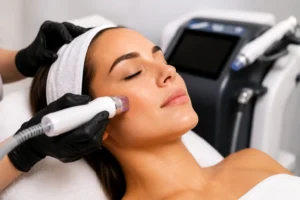
Daily broad-spectrum sunscreen remains the most effective anti-aging product available. Once damage has accumulated, collagen-stimulating treatments can help restore structure. Morpheus8 RF microneedling in Louisville delivers radiofrequency energy beneath the surface to rebuild collagen, and red light therapy in Louisville, KY supports energy production in skin cells with no downtime.
How Do These Factors Work Together?
The eight factors rarely act alone. Poor sleep raises cortisol, which pushes blood sugar up and encourages fat storage around the midsection. That visceral fat releases inflammatory signals, which interfere with hormone balance and make muscle harder to maintain. Each link strengthens the next, and this chain is a big reason aging can seem to accelerate suddenly in midlife.
The chain also runs in the other direction. Building muscle improves insulin sensitivity, and better metabolic health tends to calm inflammation. Progress on one factor usually lifts others along with it, so the most practical approach is to find the weakest link first and work outward from there.
How Does RevitaLife MD Support Healthy Aging in Louisville?
RevitaLife MD is a health optimization and longevity center on Shelbyville Road in Louisville, led by Dr. Brad Cummins. Care starts with data. Most patients begin with the $297 Complete Health Optimization package, which pairs comprehensive lab work with a one-on-one consultation to identify which of these factors is pulling hardest on your health. Genetic testing is available for patients who want a clearer view of inherited risk.
From there, each plan combines lifestyle guidance with targeted treatment, whether that means correcting a hormone imbalance or addressing metabolic health through weight management. Patients who want a regular maintenance routine often choose the Superhuman Protocol in Louisville, which sequences several of our recovery therapies into a single visit.
Where most patients begin: a baseline lab panel. Testing shows which factor is doing the most damage in your case, so your time and money go toward the change with the biggest payoff. |
Frequently Asked Questions
At what age does aging start to speed up?
Many people notice shifts in energy and body composition during their 40s, often tied to hormonal changes and gradual muscle loss. The underlying processes begin earlier, which is why habits built in your 30s keep paying off for decades.
Can you reverse aging?
Chronological age only moves forward. Many markers of biological aging respond to treatment, though, and improvements in inflammation or hormone levels can show up on lab work within a few months of consistent changes.
Which factor matters most for healthy aging?
It depends on the person. One patient’s main driver may be untreated insulin resistance, while another is held back by poor sleep or low testosterone. Lab testing identifies the biggest lever in your specific case.
Does healthy aging affect how you look?
Yes. Skin often mirrors what is happening inside the body, so lower inflammation and balanced hormones tend to show in skin quality. Aesthetic treatments can then address sun damage that internal care cannot fully reverse on its own.
How often should longevity labs be repeated?
Your provider will set the schedule based on your results. Retesting tends to happen more often while treatment is being adjusted and less often once levels have stabilized.
The Bottom Line
Healthy aging depends on a set of biological systems that respond, for better or worse, to how you live. Genetics deal the opening hand. The remaining factors, from metabolic health to sleep, decide much of how that hand plays out over the decades, and nearly all of them can be measured and improved.
Curious which factors are shaping your own aging? Book a consultation with our Louisville team, and we will build a plan around the markers that matter most for you.
Disclaimer
This content is provided for general educational purposes and is not intended as medical advice. The treatments described are intended to support overall health and are not intended to diagnose, treat, cure, or prevent any disease. Individual results vary and are not guaranteed. Please consult a licensed healthcare professional before beginning any new treatment, particularly if you are pregnant or managing a chronic medical condition.
References
Shenhar B, Pridham G, De Oliveira TL, et al. Heritability of intrinsic human life span is about 50% when confounding factors are addressed. Science. 2026;391(6784):504-510. Read the study
López-Otín C, Blasco MA, Partridge L, Serrano M, Kroemer G. Hallmarks of aging: An expanding universe. Cell. 2023;186(2):243-278. Read the study
Furman D, Campisi J, Verdin E, et al. Chronic inflammation in the etiology of disease across the life span. Nature Medicine. 2019;25(12):1822-1832. Read the study