Two of the most requested wellness treatments at our Louisville practice share a loyal following, yet they work in completely different ways. People walk in asking for one when they really want the other. Both rely on invisible wavelengths. Both get marketed for recovery and better-looking skin. That surface resemblance is where the similarity ends.
Knowing what separates an infrared sauna session from a red light therapy session helps you put your time and money toward the treatment that actually moves you toward your goal. This guide covers how each one works, what the research shows, and how to choose between them.
What an infrared sauna session actually does
An infrared sauna uses infrared wavelengths to warm your body directly rather than heating the air around you. The result is a deep, penetrating heat that raises your core temperature and pulls a heavy sweat at lower ambient temperatures than a traditional steam room. You feel the warmth settle into your tissues instead of fighting to breathe in hot, thick air.
That rise in core temperature is the engine behind the benefits. As your body works to cool itself, your heart rate climbs, blood vessels widen, and your sweat glands kick into a higher gear. Regular users describe the experience as something close to a passive cardio session, and the physiological response backs that up. Your body treats moderate heat stress as a workout, then adapts to it.
The treatment has earned its reputation for a few clear reasons:
- Recovery and pain relief. Increased blood flow carries oxygen and nutrients to tired muscles and joints, which can ease soreness after training and calm the stiffness tied to chronic conditions.
- Stress relief and better sleep. Sessions encourage a drop in cortisol and a shift into a parasympathetic, rested state, the same calm that makes deeper sleep easier to reach later that night.
That circulation boost matters beyond the session itself. Better blood flow reaches the peripheral parts of the body that tend to get neglected, and over weeks of regular use many people report warmer hands and feet and a general sense of better conditioning. The cardiovascular load of a sauna session is gentle enough for most healthy adults yet real enough to register as meaningful work for the heart.
Sweating also supports your body’s natural detoxification pathways and tends to leave skin looking clearer and more even over a course of visits. People carrying heavy training loads, demanding work schedules, or simple everyday tension gravitate toward the sauna because it addresses the whole body in one sitting. Our infrared sauna therapy in Louisville runs in private sessions, so you control the temperature, the timing, and the playlist.
What a red light therapy session actually does
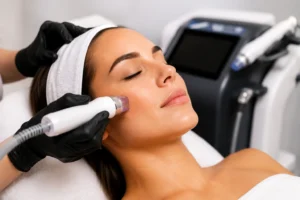
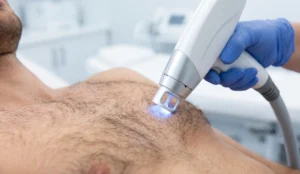
Red light therapy, also called photobiomodulation, delivers specific wavelengths of red and near-infrared light into your skin and the tissue beneath it. The light is absorbed by the mitochondria inside your cells, the structures responsible for producing cellular energy. Once those mitochondria take in the light, they generate more ATP, and that extra energy fuels repair and regeneration from the inside out.
The temperature of the room stays exactly where it was. You sit or stand in front of a panel of LEDs, feel a gentle warmth at most, and let the light do the work. A typical session runs ten to twenty minutes, short enough to fit into a lunch break with time to spare.
Because the mechanism is cellular rather than thermal, the benefits cluster around tissue repair and skin quality:
- Skin rejuvenation. The light prompts fibroblasts to produce more collagen, the protein that firms skin and softens fine lines and wrinkles over a course of sessions.
- Recovery and inflammation control. Athletes use it to speed muscle recovery and quiet inflammation, and that same anti-inflammatory effect supports faster wound healing after procedures or injuries.
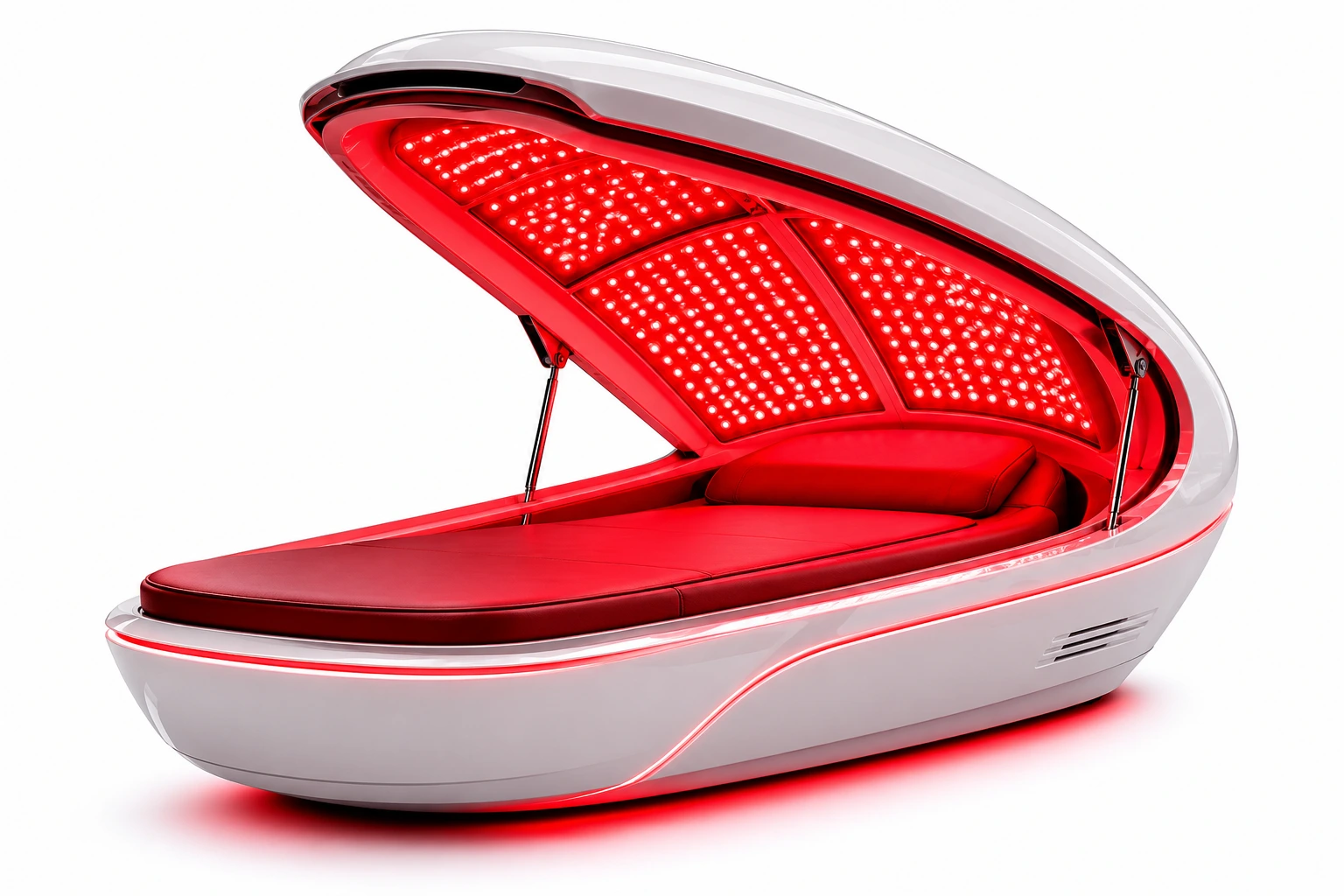
There is a wavelength nuance worth knowing. Infrared saunas lean heavily on far-infrared heat, while clinical red light beds combine visible red light with near-infrared. Red wavelengths are absorbed by the surface layers of skin, which is why they shine for collagen and tone. Near-infrared reaches deeper into muscle and joint tissue, which is what makes the treatment useful for recovery and not only for skin. Our red light therapy in Louisville, KY runs on a TheraLight full-body bed loaded with 40,000 LED bulbs that deliver four therapeutic wavelengths, three of them in the invisible near-infrared spectrum that reaches well below the surface.
Bulb count and wavelength range matter far more than most people realize. They are the two factors that decide how much usable light energy actually reaches your cells in a session. A typical at-home red light panel runs fewer than 1,000 LEDs and a much narrower wavelength range, which means it would take more than ten hours of at-home use to deliver the energy you absorb in 15 minutes on our clinical bed. The technology itself sets the ceiling on what any given session can do.
Set your expectations correctly and the treatment tends to satisfy. Red light therapy works gradually and rewards patience, building skin and tissue changes session by session. It pairs naturally with other skin treatments and supports recovery between them, which makes it a steady background habit rather than a one-time fix.
Infrared sauna vs. red light therapy at a glance
The fastest way to see the contrast is side by side. The table below maps out where these two treatments diverge.
|
Factor |
Infrared sauna |
Red light therapy |
|
How it works |
Infrared heat raises your core body temperature |
Red and near-infrared light energizes your cells |
|
Main mechanism |
Sweating, circulation, and the heat-stress response |
Mitochondrial energy (ATP) production |
|
What you feel |
Strong, enveloping heat and a heavy sweat |
Mild warmth at most, with no sweating |
|
Best known for |
Detox support, deep relaxation, muscle and joint relief |
Collagen production, skin tone, and tissue repair |
|
Session length |
30 to 45 minutes |
10 to 20 minutes |
|
Right after |
Cool down and rehydrate |
Head straight back into your day |
|
Ideal candidate |
Anyone chasing whole-body recovery and stress relief |
Anyone focused on skin quality and targeted healing |
|
A simple rule of thumb: reach for the infrared sauna when you want to feel reset from the inside out, and reach for red light therapy when you want visible change in your skin and faster healing in a specific spot. |
What the research says about results
Both treatments rest on a growing body of evidence, though the strength of that evidence varies by claim.
Infrared sauna use draws on decades of sauna research, much of it out of Finland, linking regular heat exposure to better cardiovascular markers and lower blood pressure. The cardiovascular and relaxation effects are the most established part of the literature. Detoxification claims, while widely repeated, sit on a thinner research base, so it helps to treat the sauna as a strong recovery and stress tool first and a detox aid second.
Red light therapy has been studied closely for skin outcomes. In a randomized, controlled trial published in Photomedicine and Laser Surgery, participants treated with red light showed measurably improved skin complexion and reduced roughness, along with a significant rise in intradermal collagen density compared with an untreated control group. Blinded evaluators and ultrasound imaging confirmed the changes (Wunsch & Matuschka, 2014). That kind of objective, instrument-verified finding is what gives red light therapy credibility beyond anecdote.
The honest takeaway is that neither treatment works like a switch. A single session feels good. A standing weekly or twice-weekly habit is where the measurable changes show up, so consistency matters more than intensity with either one.
How to choose the one that fits your goal
Your goal should drive the decision, so start by naming what you actually want to change.
If your priority is recovery from hard training, relief from nagging joint pain, deeper sleep, or a genuine sense of decompression, the infrared sauna is the stronger match. It works the whole body at once and leaves most people feeling noticeably calmer and looser when they step out. The heavy sweat is part of the appeal for anyone who associates a good effort with that wrung-out, accomplished feeling.
If your priority is firmer skin, fewer fine lines, faster healing of a specific injury, or support for thinning hair, red light therapy is built for exactly that. It targets cellular repair without taxing your cardiovascular system, which makes it a comfortable option on days when you have no interest in sweating or raising your heart rate.
Comfort matters too. Some people love intense heat and some cannot tolerate it. Red light therapy gives heat-sensitive clients a path to recovery benefits without the thermal load. Anyone managing a cardiovascular condition, anyone who is pregnant, or anyone unsure how their body handles heat should speak with a provider before booking a sauna session, and our team is glad to help you make that call before you ever step into a suite.
Time is the other practical factor. A red light session can be done and dusted in under twenty minutes, which suits a packed calendar. A sauna session asks for a little more, both for the heat itself and for a proper cool-down afterward. Neither demand is large, but if your week is tight, that difference can decide which treatment you realistically keep up with, and consistency is what produces results.
Questions clients ask before their first session
Will I sweat during red light therapy?
No. The light works at a cellular level and the room stays at a normal temperature, so you stay dry and comfortable the entire time. Sweating belongs to the sauna side of the comparison.
How quickly will I notice results?
The sauna delivers an immediate payoff in how you feel, often a loose, calm, well-recovered sensation the same day. Red light therapy works on a slower timeline, with skin and tissue changes building over several weeks of regular sessions.
Can I do both on the same day?
Yes, and many clients do exactly that. The two treatments place very different demands on the body, so pairing them in one visit is both safe and, for a lot of people, the most efficient way to get the full range of benefits.
Why not stack them both together
The most effective use of these technologies is to layer them with a few other recovery tools in a single visit. Each modality activates the body in a different way, and stacking them lets the effects compound rather than compete.
We have built that sequence into one streamlined session called the SuperHuman Experience. It moves you through several recovery technologies in a deliberate order within about 40 minutes, designed for people who want the broadest range of benefits from a single visit.
Here is what the core stack looks like:
|
Stage |
Time |
|
PEMF therapy (with optional lymphatic compression garments) |
8 minutes |
|
TheraLight red light bed |
15 minutes |
|
Infrared sauna pod with internal red lights and lymphatic vibration |
15 minutes |
The sauna pod heats up to 194 degrees Fahrenheit quickly and includes its own internal red lights along with a vibration plate that supports lymphatic drainage while you sweat. PEMF, short for pulsed electromagnetic field therapy, primes the body at the cellular level before the heavier modalities take over, and the optional compression garments speed lymphatic flow during that opening segment.
Two optional add-ons extend the session further. EWOT, short for exercise with oxygen therapy, layers in 90 to 100 percent oxygen during your sauna time so your cells receive a concentrated oxygen push during the heat. Braintap, a guided audio and light session, settles your nervous system into a parasympathetic theta state, the calm, restorative mode where sleep quality and stress resilience both improve.
|
SuperHuman Experience pricing Ten-session package: $997 Launch offer (first 10 clients only): ten-pack for $500 |
Some clients also add hyperbaric oxygen therapy in Louisville when targeted recovery is the central focus.
What a session looks like at RevitaLife MD
RevitaLife MD operates as a health optimization and longevity center, which means these wellness treatments sit alongside real medical oversight rather than standing on their own. Dr. Brad Cummins brings more than 20 years of clinical experience, and every client receives guidance on how a given treatment fits into a broader health picture.
For the infrared sauna, plan on 30 to 45 minutes in a private suite. Wear comfortable clothing or a towel, bring water, and expect a real sweat. For red light therapy, sessions are quick and ask nothing more than exposing the skin you want treated. Neither treatment involves needles, downtime, or a recovery period, so most people fold them into an ordinary week without rearranging a single plan.
The bottom line
Infrared sauna and red light therapy are not competitors. They are two different tools, each excellent at a specific job. The sauna resets your whole system through heat. Red light rebuilds at the cellular level through targeted wavelengths. Once you know which outcome you are after, the right choice tends to become obvious, and there is no rule against wanting both.
Ready to feel the difference for yourself? Book a wellness consultation with our Louisville team, and we will help you map the treatment, or the combination, that gets you where you want to go.
Disclosure
The information in this article is provided for general educational purposes and is not intended as medical advice. The wellness treatments described are intended to support overall well-being and are not intended to diagnose, treat, cure, or prevent any disease. Individual results vary and are not guaranteed. Please consult a qualified healthcare provider before starting any new treatment, particularly if you are pregnant, managing a cardiovascular condition, taking medications that interact with heat or light exposure, or uncertain how your body will respond to either modality.